Type Into Web Element Step
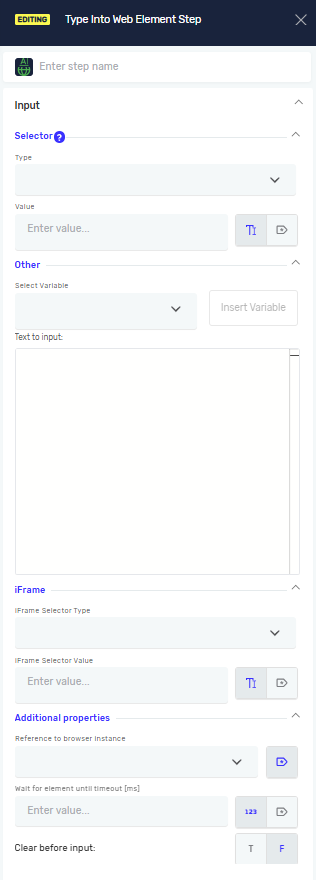
The Type Into Web Element step puts text into a specific field on a web page. Use this step to automatically fill out web forms or search bars.
How to Use Type Into Web Element
This step types text into a web element.
Step 1: Add the Step to Your Process
- Drag and drop the "Type Into Web Element" step into your process flow.
- Give the step a custom name in the Step Name field (optional). This helps label the step in the editor.
Step 2: Set Up Input Parameters
Set up these parameters to tell the step where to type and what text to use.
Parameters Explained
Step Name (Optional)
- A custom name for the process step. This name shows up in the editor.
Selector Type (Required)
- Tells the system how to find the web element.
- Options: Class Name, CSS Selector, Name, Id, Link Text, Partial Link Text, Tag Name, XPath.
- Example: If you want to type into a field with
id="username", pick "Id".
Selector Value (Required)
- The specific value for the selector type you chose.
- You can use an existing variable or type a direct value.
- Example: If you picked "Id" for Selector Type, the Selector Value would be
username.
Select variable (Optional)
- A button to pick an existing variable from a list.
Text to input (Required)
- The text you want to type into the web element.
- You can use variables here.
- Example:
John Doeor{{userNameVariable}}
IFrame Selector Type (Optional)
- Defines how the iframe containing the target web element is identified.
- Options:
Class Name,CSS Selector,Name,Id,Link Text,Partial Link Text,Tag Name,XPath - Select the option that best identifies the iframe you want to interact with.
IFrame Selector Value (Optional)
- Specifies the value used to locate the iframe based on the selected IFrame Selector Type.
- Example: If IFrame Selector Type is
Id, the IFrame Selector Value could bepaymentIframe. - Use this when the element you want to interact with is located inside an iframe.
Driver Reference (Required)
- The existing variable that holds the reference to your web browser.
Wait for Element until timeout [ms] (Required)
- The longest time (in milliseconds) the robot will wait for the web element to show up before stopping.
- Example:
5000(for 5 seconds)
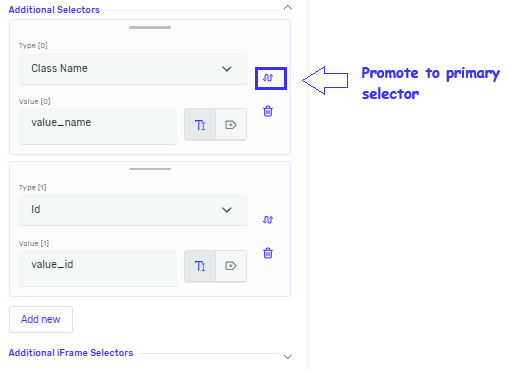
Addditional Selectors (Optional)
- List of selectors, allowing you to define multiple selectors for the same step
- If the primary selector fails and additional selectors are defined, the step will automatically try the additional selectors in order.
- You can add, remove, and reorder selectors at any time.
- Any selector can be promoted to the primary selector, which will swap its position with the current primary selector.
- Each selector is evaluated for the duration of the timeout defined on the step before moving on to the next one.
- If you want to promote a selector to be the primary selector, first provide all required details (selector type and value), then click the swap icon next to selector type.
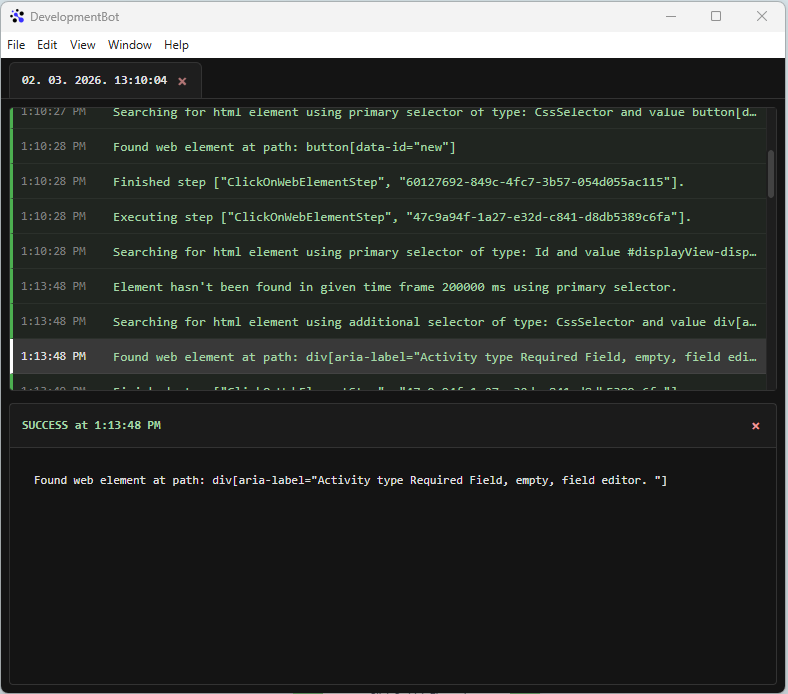
The log indicates which selector was successfully resolved. If a secondary selector from the selector list is consistently matched, you may consider setting it as the primary selector.
Related Articles
Need Help?
Can't find what you're looking for? Join the Robotiq Community to get help from other users and the Robotiq team.